
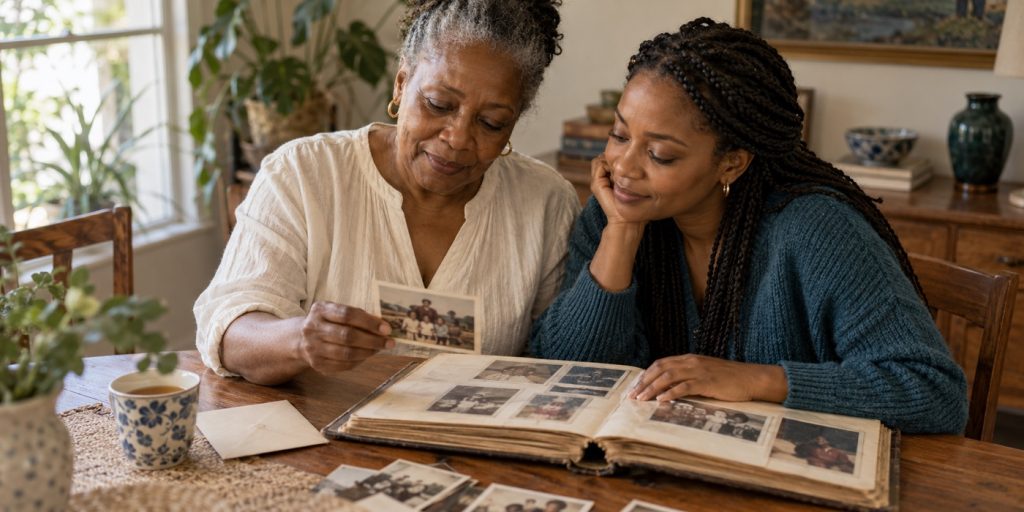
There is often a photograph that needs no explanation between two people. Everyone else sees a slightly windswept couple on a beach. You remember the wrong turn, the late lunch and how much you laughed on the way home.
Sentimental gifts begin with that kind of recognition. A letter, a family recipe, a photograph or an artwork can carry a connection to a particular person, place or part of someone’s life. The meaning comes from what the recipient recognises in it.
That gives you a useful place to start, especially when you are buying for someone who already has everything they need. Before looking for an object, think about what you would like them to remember, feel or know.
Choose the memory before choosing the gift
Think of one moment you can describe without reaching for words such as “special” or “unforgettable”. The kitchen table where everyone squeezed in. The dog asleep across both your feet. The mountain you could see from the flat you shared.
Then ask whether that memory belongs to the recipient as warmly as it belongs to you. Your favourite photograph of a person may be one they have never liked. A home you remember fondly may hold a more complicated story for someone else.
You do not need to turn this into an interview. Try a small question: “Which photo from that trip do you like best?” or “Do you still have the recipe she used to make?” Their answer may take you somewhere better than your original idea.
Once you have the connection, decide how privately they might like to enjoy it. A letter can be read alone; an album can be opened when they choose. Artwork becomes part of a room that other people see. If they would love the memory but not the questions it might invite, keep it in a letter or album. A familiar place may also feel more comfortable on the wall than a formal portrait.
Write down the story they might not know you remember
A letter works particularly well when there is something you have meant to say but never quite found a moment for. Keep it specific. Instead of trying to describe everything a parent means to you, tell them about the evening they stayed up to help you finish something, or the lift they gave you when you did not want to ask.
You can use a simple shape:
- What happened: name the moment, place or small habit.
- What you noticed: explain the part that stayed with you.
- Why you are telling them now: connect it to the birthday, anniversary or ordinary day on which you are giving it.
For a family gift, you could ask a few relatives to contribute one short memory each. Give them a focused prompt, such as “Tell me about a meal at her house”, rather than asking for a sweeping account of someone’s life. A collection of small observations can sound much more like the family itself.
If you record stories instead, make sure everyone contributing is comfortable with how the recording will be shared. Include names and dates somewhere sensible. The familiar voice is the pleasure now; the context helps the story make sense later.
Make a small photograph album with room for the details
An album does not need to cover an entire relationship. One holiday, a first year together, or a collection of ordinary afternoons can be enough.
Choose photographs that say different things. If every page is another version of the same posed picture, the story can disappear behind the repetition. Mix a few people, places and details: the table before everyone arrived, the view from the stoep, the pet who managed to get into every photograph.
Add captions that tell the recipient something the image cannot. A place name, an approximate year or a sentence someone said will usually do more than a decorative quotation. If you are unsure of a date, say so rather than turning a guess into family history.
Leave out pictures that would embarrass them, even if everyone else thinks they are funny. A gift should be comfortable for its owner to open and keep.
Choose artwork from a photograph they would enjoy living with
An album holds a collection. Artwork asks you to choose one image that deserves a place in someone’s everyday surroundings.
Start with what they are drawn to. It could be a couple caught mid-conversation, their dog looking up from a familiar spot, or the front of a family home. The most polished photograph is not always the one with the strongest connection.
For artwork, though, the subject still needs to be clear. Look for a photograph where the person, animal or building is easy to distinguish, without important features lost in deep shadow or hidden behind something else. Look at the style examples before ordering so that you understand how the photograph will be interpreted.
Ordered Lines custom artwork turns a supplied photograph into a physical line drawing. The studio develops the composition; a pen plotter then moves a real pen across the paper to draw the finished work in ink. It is drawn, rather than printed.
You choose from the available options, upload the photograph and provide an artwork title. The studio makes the composition decisions after checkout, without a proof or revision stage. The artwork is supplied unframed in protective packaging, with South African delivery.
That makes it worth considering the whole gift before ordering: the size, where it might go, whether you will arrange a frame, and whether the recipient enjoys this kind of artwork. Read how the studio-led process works, and ask about timing before ordering for a fixed date.
Let a familiar place carry the connection
A sentimental gift does not have to show the person receiving it. Sometimes a place is easier to live with than a portrait.
For someone whose life has a Cape Town chapter, a familiar outline might recall student years, early-morning walks or visits to family. The Lion’s Head artwork is an existing Ordered Lines studio composition, physically drawn in ink on paper. It requires no customer photograph or personalisation.
The connection still needs to be theirs. If Lion’s Head means little to the recipient, the fact that it is a recognisable landmark will not make it a meaningful gift. Think about which place they mention, which view they stop for, or where they would happily spend an afternoon again.
You could pair a place-related gift with a short note explaining the memory. “This reminded me of the view from our first flat” gives it a connection that a generic dedication cannot.
Pass on a recipe, a small object or a family ritual
A recipe in familiar handwriting can hold several things at once: the food itself, the person who made it, and the occasions when everyone gathered to eat it.
You could give a copy of the recipe with a few practical notes that never made it onto the original page. Which tin did they use? What did “a little more milk” look like? If the recipient enjoys cooking, make it together and write those details down while you go.
A small family object can work in a similar way. Tell its story and make sure it is yours to give. Do not pass along something fragile, valuable or in need of care without letting the recipient decide whether they want that responsibility.
The same care applies to the original recipe or letter. A copy lets someone enjoy the connection while the original stays safely with its owner.
Give a sensitive memory some breathing room
A photograph connected to bereavement, a pet who has died or a home someone has had to leave can be deeply personal. It may be welcome, or it may be more than the person wants to encounter unexpectedly.
If you are unsure, ask gently before commissioning or assembling the gift. “Would you like something with this photograph, or would you rather keep it as it is?” leaves room for either answer.
Give it privately if that would feel more comfortable. There is no need to ask the recipient to open it in front of a group, pose for a photograph or explain their reaction. They get to decide what the gift means to them and when they want to spend time with it.
When the gift can simply be a day together
Sometimes the strongest connection is to something you used to do. Cook the meal again. Return to a favourite walk at a pace that suits them now. Set aside an afternoon to look through photographs and let them tell you the stories.
It does not need to reproduce the past exactly. People’s lives, energy and circumstances change. Keep the part they enjoyed and make the plan easy for them to accept.
If none of these directions feels right, our broader gift ideas guide includes choices centred on interests, shared experiences and everyday pleasures.
For a sentimental gift, one honest connection is enough. Choose it with care, explain why it made you think of them, and leave them free to enjoy it in their own way.